The Artist Is the Author: How Óde Structures a Season
Most fine jewelry brands that work with artists do so on a brief. The brief comes first. The artist responds to it. The result is the brand’s, shaped by the brand’s instincts, refined by the brand’s approval. The artist’s name is in the press release. The artist’s vision is not in the piece.
Óde is built on a different premise. The artist is the author. Not a contributor. Not a collaborator-for-hire. The author.
What That Means in Practice
Each season, we choose one artist. The choosing is not passive. We look for people whose instinct for material – the weight of things, the logic of form, the reason a surface is left rough or made smooth – already speaks the same language as gold and diamond. We are not looking for a name. We are looking for a sensibility.
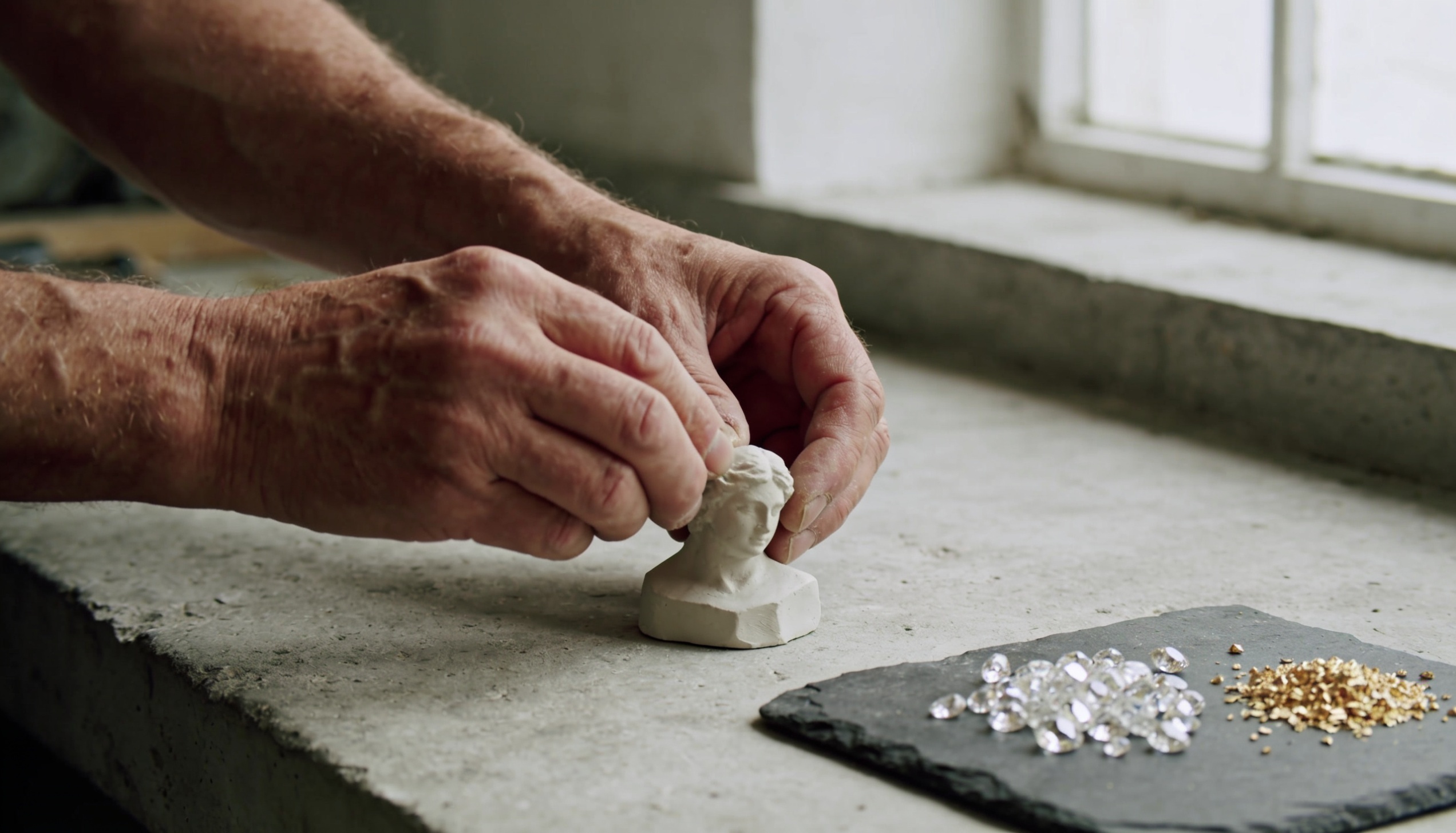
When we found Māris Šustiņš, the conversation about Kocmoc was already halfway done before anything was agreed. When Grishigiano came into Season II, the same thing happened. A sculptor whose hands understand volume and weight. The material of fine jewelry – the density of 18-karat gold, the hardness of eco diamond – is not foreign to that understanding. It is the same understanding.
The artist brings the concept. The obsessions. The visual logic that holds every piece together as a body of work rather than a product catalogue. We bring the craft, the diamonds, the production infrastructure that turns a sculptor’s thinking into something permanent and wearable.
The result is entirely theirs. Made in gold.
Why the Distinction Matters
There is a category of fine jewelry described as artist-designed. Most of it means: a designer with a distinctive aesthetic. The product is made to sell. The aesthetic is consistent because consistency reassures buyers. The pieces are the brand’s pieces, in the brand’s language, season after season.
That is not wrong. It is a different thing.
What Óde is building is closer to how a gallery works. A gallery does not commission the artist to make work that fits the gallery’s brand identity. The gallery selects artists whose existing vision is strong enough to hold a room. The artist makes what the artist makes. The gallery creates the conditions for that to happen and puts it in front of the people who will understand it.
Óde is that – but in gold. With eco diamonds from EcoDiamond®, the laboratory that built us. With the Amber Road as a thread of origin that runs through every season even when the season looks nothing like the last.
The Material Is Chosen. So Is Everything Else.
Our diamonds are not incidental. InfiniteDiamond® – grown in a laboratory, carrying a story inside the stone – is the material we work with because it is the material that fits the ethic of what we are building. An artist’s work should not be underwritten by extraction. The piece should not cost the earth the thing the artist spent a career trying to articulate.
Lab-grown diamonds are not a compromise. In our hands, they are the correct answer to a question about what fine jewelry can mean when an artist is in charge of meaning.
So the stone is chosen. The gold is chosen. The artist is chosen. The season is the result of all three choices landing in the same place at the same time.
What We Are Not
We are not a customisation platform. We do not offer the customer a canvas. The pieces are not made to be personalised in the way a monogram personalises a bag.
We are not a design agency that happens to work in precious materials. There is no brief. There is no client relationship with the artist in the commercial sense of that phrase.
We are not a gallery that sells art that happens to be wearable – though we understand why that comparison is made. The work functions as jewelry. It is worn. It is permanent. It moves with a body through time. That is part of the intention, not a limitation of the medium.
The Format Is the Structure
Artists Playground is not a tagline. It is a description of the operational structure. The playground is real. The constraints are real – material, scale, the body that will wear the piece. Inside those constraints, the artist has the full run of the space.
That is what we mean by authorship. Not freedom from constraint, which would produce something unlivable. Authorship within the constraint. The constraint is the medium. The authorship is the thinking that makes the medium do something it has not done before.
Season I was Kocmoc – iridescent titanium, orbiting gold, diamonds at the points of tension. Objects that feel discovered rather than designed. Season II is Grishigiano. A sculptor’s logic applied to jewelry’s logic. What happens next is what the next artist brings.
We do not know yet. That is the point.
If you are an artist whose instinct for material already speaks this language, the collaboration page is where the conversation starts. Not a brief. A conversation.